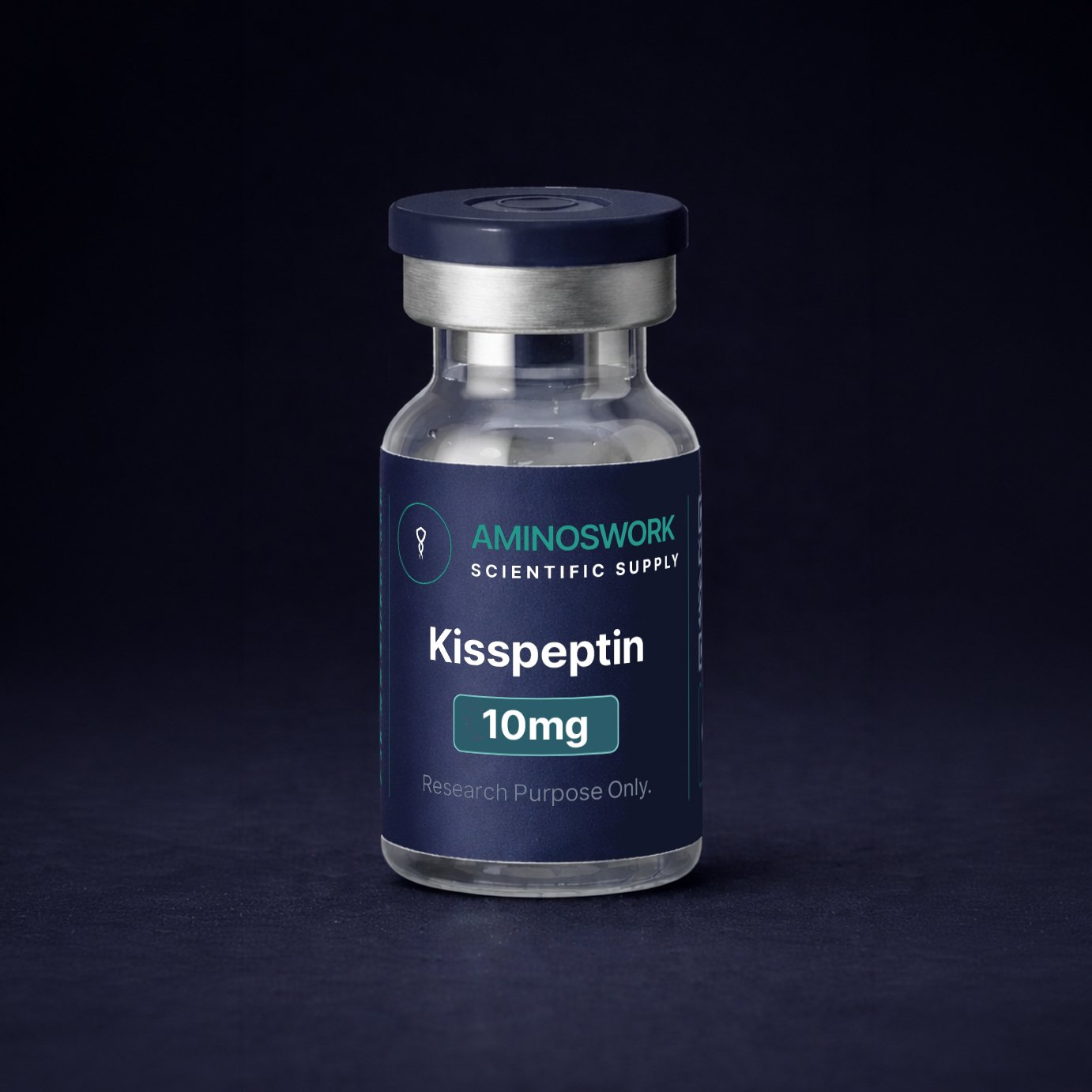
Kisspeptin

CAS: 374675-21-5

|

SKU:Kisspeptin

Kisspeptin-10 is a hypothalamic neuropeptide that plays a critical role in the regulation of the Hypothalamic-Pituitary-Gonadal (HPG) axis and reproductive signaling in research models.
Current Lot ID
2602-C113-10-001
Third-party analytical validation via HPLC & MS / Sequence matching verified

Research Use Only

This product is intended for research purposes only.

Configure Order

Select quantity and verify pricing.
SELECT CONCENTRATION
VOLUME PRICING
1
Technical Specification

Scientific Context & Applications

Research Profile Access

View extended technical data, molecular targets, signaling pathways, and historical research timelines for Kisspeptin

Scientific Context
Molecular classification and background.

  • Kisspeptin is the biologically active peptide derived from the KISS1 gene product and functions as a high-affinity ligand for the GPR54 (KISS1R) receptor. In laboratory research models, kisspeptin signaling within hypothalamic neuronal populations has been characterized as a key regulatory component of gonadotropin-releasing hormone (GnRH) secretion.
  • Through receptor-mediated activation, kisspeptin participates in modulation of downstream neuroendocrine signaling cascades governing pituitary gonadotropin release and reproductive axis coordination. All observations are derived from controlled non-clinical experimental systems and interpreted strictly at the molecular and cellular research level.

Laboratory Applications
Experimental models and settings.

  • HPG Axis Regulation: Utilized in experimental models to examine GnRH-dependent luteinizing hormone (LH) and follicle-stimulating hormone (FSH) signaling dynamics.
  • Neuroendocrine Research: Applied in studies investigating hypothalamic control of reproductive hormone pulsatility.
  • Cell Migration Research: Investigated in early research contexts examining peptide-mediated modulation of cellular motility pathways.
  • Reproductive Signaling Models: Used in laboratory systems studying alterations in GnRH pulse frequency and amplitude.
All applications are limited to non-clinical research environments.

Scientific References
Peer-reviewed literature data.

Peer-reviewed literature and citation data.
  • Kotani M, et al. “Kisspeptin receptor ligand.” Journal of Biological Chemistry
  • Seminara SB, et al. “Kisspeptin and puberty.” New England Journal of Medicine
  • Dhillo WS, et al. “Kisspeptin stimulates LH.” Journal of Clinical Endocrinology & Metabolism
  • Ohtaki T, et al. “Metastasis suppressor gene.” Nature

Related Research Compounds

Explore compounds frequently investigated in similar research domains and signaling pathways.

Epithalon

307297-39-8

CJC-1295 No DAC / Ipamorelin

863288-34-0 / 170851-70-4

Cagrilintide

1415456-99-3

BPC-157

137525-51-0

AOD-9604

221231-10-3