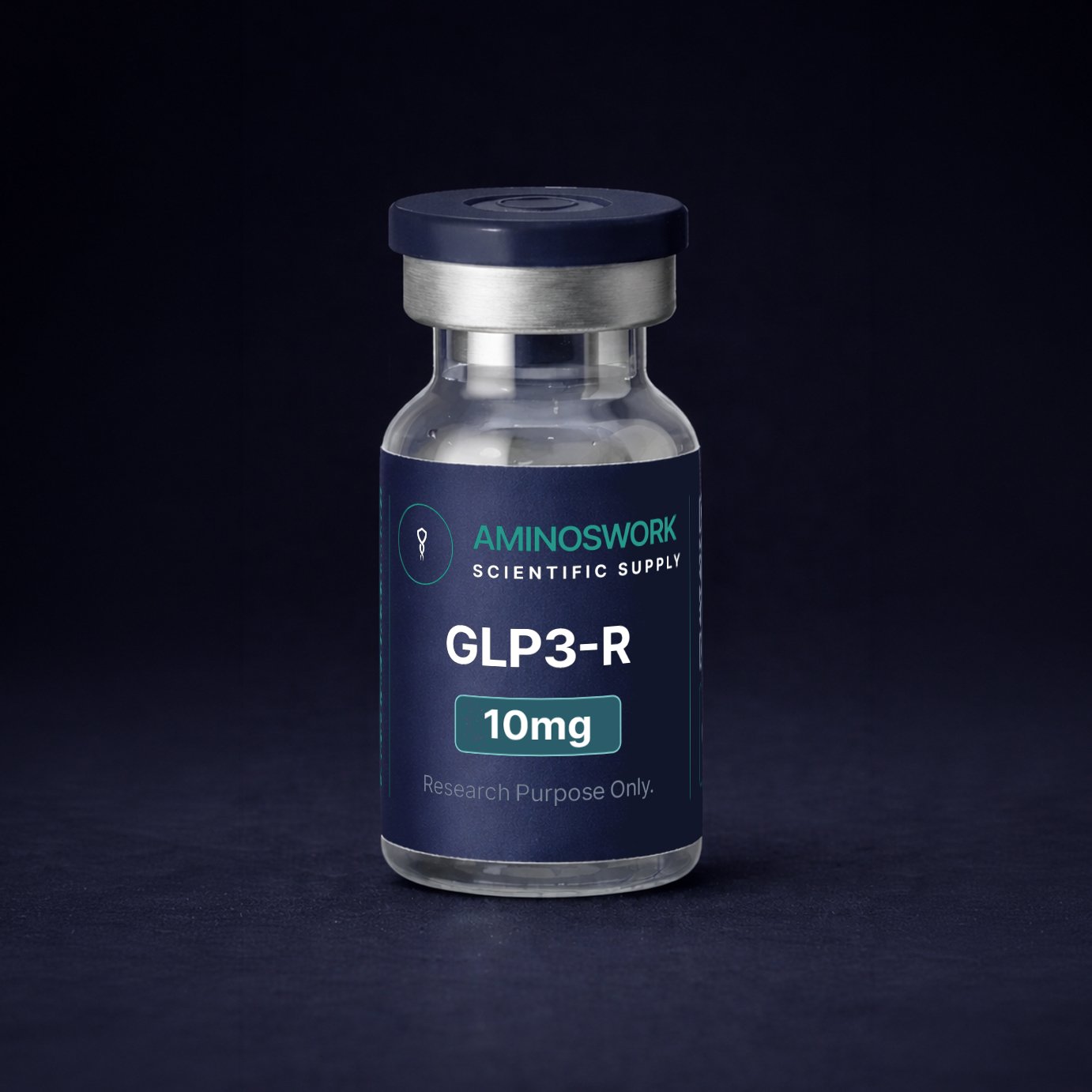
GLP3-R

CAS: 2381089-83-2

|

SKU:GLP-3-R

GLP3-R is a synthetic tri-agonist peptide analogue engineered for laboratory research involving glucagon receptor (GCGR), glucose-dependent insulinotropic polypeptide (GIP), and glucagon-like peptide-1 (GLP-1) receptor signaling.
Current Lot ID
2602-C103-10-001, 2602-C103-20-001, 2602-C103-30-001, 2602-C103-50-001, 2602-C103-60-001
Third-party analytical validation via HPLC & MS / Sequence matching verified

Research Use Only

This product is intended for research purposes only.

Configure Order

Select quantity and verify pricing.
SELECT CONCENTRATION
VOLUME PRICING
1
Technical Specification

Scientific Context & Applications

Research Profile Access

View extended technical data, molecular targets, signaling pathways, and historical research timelines for GLP3-R

Scientific Context
Molecular classification and background.

GLP3-R is classified as a tri-receptor agonist research peptide designed to engage GCGR-, GIP-, and GLP-1-associated signaling pathways within experimental systems. Tri-agonist peptide architectures have been developed in research settings to explore:
  • Relative receptor contribution to downstream signaling
  • Cross-talk between glucagon- and incretin-related pathways
  • Integrated signal modulation across multiple metabolic receptor systems
Studies involving GLP3-R focus on molecular and cellular signaling behavior, not physiological, therapeutic, or clinical outcomes. All observations are limited to controlled laboratory models.

Laboratory Applications
Experimental models and settings.

GLP3-R is utilized in non-clinical research environments as a signaling probe to examine multi-receptor pathway interactions and intracellular response dynamics. Reported experimental contexts include:
  • Triple Receptor Signaling Studies Used in engineered cellular systems to evaluate GCGR, GIPR, and GLP-1R activation patterns, receptor contribution, and downstream signaling integration.
  • Mitochondrial & Energy-Associated Signaling Research Applied in laboratory models to investigate cellular energy-related signaling pathways, including receptor-mediated metabolic signaling cascades.
  • Hepatic-Derived Cell Research Models Examined in liver-derived cellular systems to study glucagon-associated intracellular signaling mechanisms, without disease or clinical framing.
  • Systems-Level Metabolic Signaling Models Utilized to explore multi-pathway coordination and signaling hierarchy across interconnected metabolic receptor networks.
All applications remain strictly investigational and confined to laboratory research use only. Research involving GLP3-R is exploratory and model-dependent. Findings observed in cellular or animal research systems are not predictive of outcomes in humans or animals outside controlled laboratory conditions. No conclusions regarding safety, efficacy, metabolic outcomes, or clinical relevance have been established.

Scientific References
Peer-reviewed literature data.

Selected peer-reviewed literature examining tri-agonist peptide design and multi-receptor signaling mechanisms:
  1. Gault VA, et al. Tri-agonist peptide signaling in experimental systems. Peptides
  2. Knerr PJ, et al. Design and characterization of tri-receptor agonist peptides. Journal of Medicinal Chemistry
  3. Finan B, et al. Multi-receptor agonist architectures in metabolic signaling research. Molecular Metabolism
  4. Jall S, et al. Monomeric tri-agonist signaling dynamics. Molecular Metabolism
(Clinical efficacy, disease outcomes, and therapeutic studies are intentionally excluded from commerce pages.)

Related Research Compounds

Explore compounds frequently investigated in similar research domains and signaling pathways.

GLP2-T

2023788-19-2

Thymosin Alpha-1 (TA1)

62304-98-7

Tesamorelin

218949-48-5

Selank

129954-34-3

GLP3-R

2381089-83-2

PT-141

189691-06-3