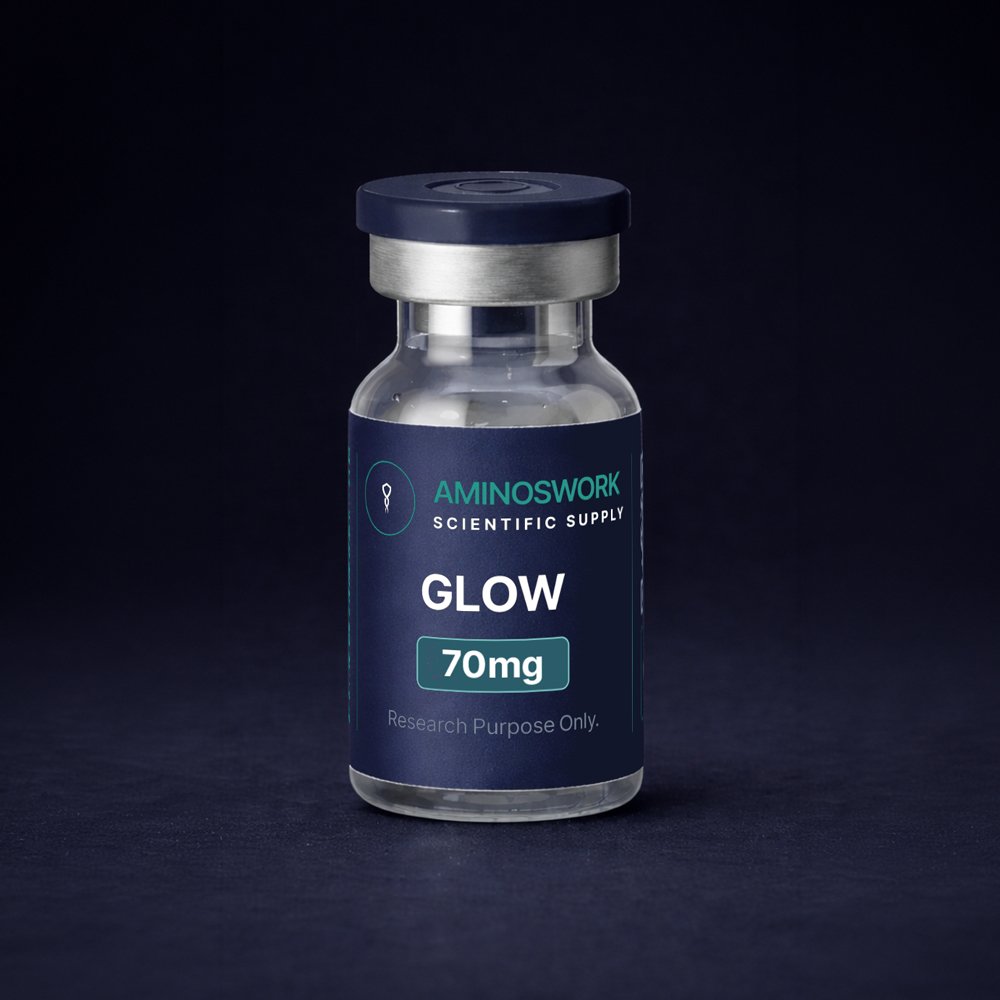
GLOW Blend

CAS: Blend

|

SKU:GLOW Blend

GLOW Blend is a multi-component peptide research formulation investigated in laboratory settings for its role in coordinated tissue remodeling, cytoskeletal organization, and extracellular matrix–associated signaling pathways in controlled experimental models.
Current Lot ID
2602-C125-70-001
Third-party analytical validation via HPLC & MS / Sequence matching verified

Research Use Only

This product is intended for research purposes only.
Configure Order

Select quantity and verify pricing.
SELECT CONCENTRATION
VOLUME PRICING
1
Technical Specification

Scientific Context & Applications

Research Profile Access

View extended technical data, molecular targets, signaling pathways, and historical research timelines for GLOW Blend

Scientific Context
Molecular classification and background.

Overview of molecular classification and research background. GLOW Blend is a research formulation combining peptide components commonly examined in cellular repair and extracellular matrix signaling research. The blend incorporates agents associated with nitric oxide–related signaling, cytoskeletal remodeling pathways, and copper-peptide–mediated extracellular matrix regulation. In laboratory research models, this formulation has been examined for its involvement in:
  • Nitric oxide–associated cellular signaling pathways
  • Actin cytoskeletal dynamics and cell-migration mechanisms
  • Collagen-associated extracellular matrix signaling
  •  Metalloproteinase (MMP)-related tissue remodeling pathways
All observations are derived from controlled non-clinical experimental systems and interpreted strictly at the molecular and cellular research level.

Laboratory Applications
Experimental models and settings.

Experimental models and investigational settings.
  • Dermal Tissue Models: Utilized in in-vitro skin or fibroblast systems to evaluate extracellular matrix–associated signaling dynamics.
  •  Wound-Model Research: Applied in experimental systems studying coordinated cellular migration and structural reorganization.
  • Angiogenesis Assays: Investigated in laboratory models examining endothelial-associated signaling responses.
  • Fibrotic Signaling Studies: Used in cellular systems evaluating balance between extracellular matrix deposition and remodeling pathways.
All applications are limited to non-clinical research environments.

Scientific References
Peer-reviewed literature data.

  • Pickart L. (Pickart L.).“GHK and tissue remodeling.”Journal of Biomaterials Science
  • Sikiric P, et al. (Sikiric P, et al.).“BPC 157 and blood vessels.”Current Pharmaceutical Design
  • Philp D, et al. (Philp D, et al.).“Thymosin beta4 and angiogenesis.”FASEB Journal
  • Kang YA, et al. (Kang YA, et al.).“Copper peptide facial study.”Journal of Cosmetic Dermatology

Related Research Compounds

Explore compounds frequently investigated in similar research domains and signaling pathways.

NAD+ Buffered

MOTS-c

1627580-64-6

Ipamorelin

170851-70-4

HGH Fragment 176-191

66004-57-7

Glutathione