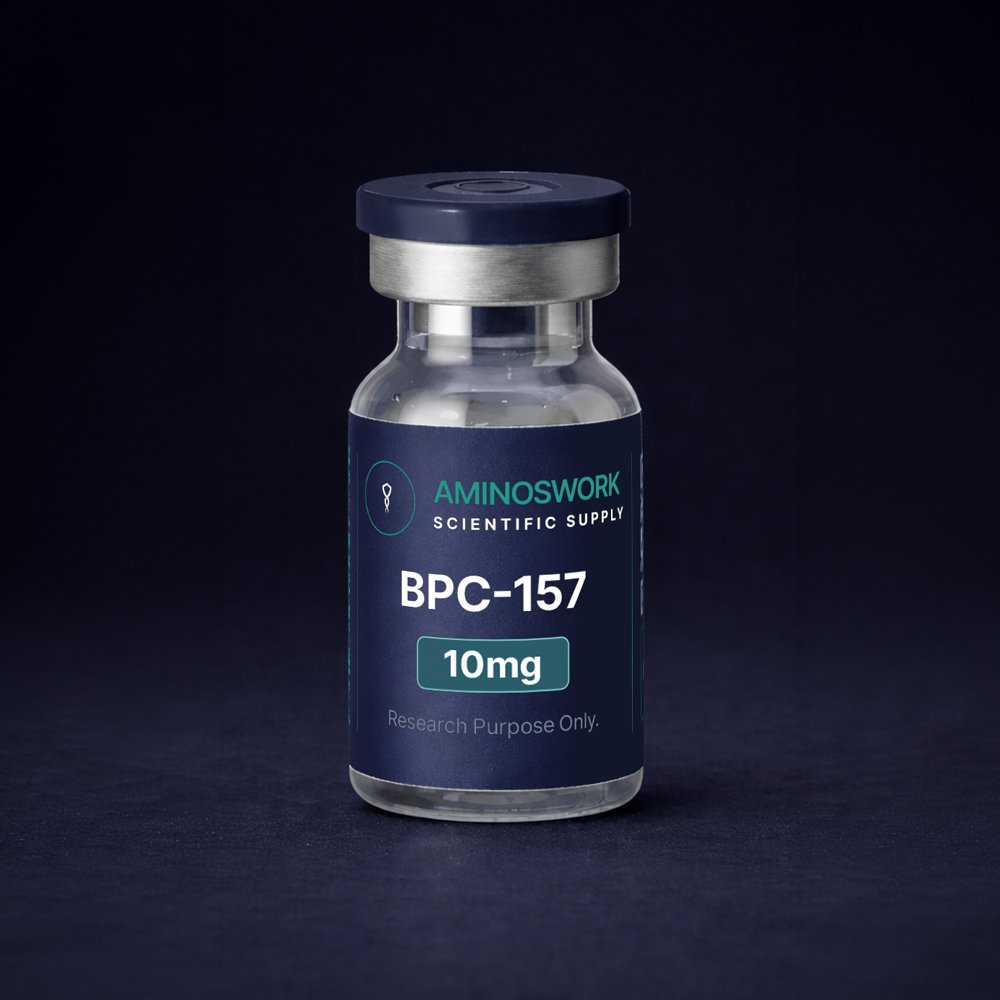
BPC-157 is a synthetic pentadecapeptide investigated in laboratory research for its role in cellular signaling associated with tissue integrity, endothelial response, and nitric-oxide–related pathways in controlled experimental models.
Current Lot ID
2602-C104-10-001
Third-party analytical validation via HPLC & MS / Sequence matching verified

Research Use Only

This product is intended for research purposes only.
Configure Order

Select quantity and verify pricing.
SELECT CONCENTRATION
VOLUME PRICING
1
Technical Specification

Scientific Context & Applications

Research Profile Access

View extended technical data, molecular targets, signaling pathways, and historical research timelines for BPC-157

Scientific Context
Molecular classification and background.

BPC-157 (Body Protection Compound-157) is a stable synthetic peptide consisting of 15 amino acids, structurally derived from a gastric protective protein sequence. In biochemical studies, BPC-157 demonstrates resistance to enzymatic degradation and stability across a range of experimental conditions. In laboratory research models, BPC-157 has been examined for its involvement in:
  •  Modulation of nitric oxide (NO)–related signaling pathways
  •  Endothelial cell signaling and vascular response mechanisms
  •  Growth-factor-associated receptor activity (including VEGFR-related pathways)
  •  Cellular signaling processes associated with tissue organization
All observations are derived from controlled non-clinical experimental systems and interpreted strictly at the molecular and cellular research level.

Laboratory Applications
Experimental models and settings.

Experimental models and investigational settings.
  • Soft Tissue Signaling Models: Utilized in experimental systems to study cellular signaling associated with tendon, ligament, and muscle tissue organization.
  •  Angiogenic Pathway Research: Applied in endothelial cell culture assays examining capillary-like structure formation and vascular signaling dynamics.
  •  Gastrointestinal Cellular Models: Investigated in laboratory models assessing epithelial signaling responses under chemical stress conditions.
  • Tissue Interaction Studies: Used in preclinical models examining coordinated cellular signaling during connective tissue remodeling.
All applications are limited to non-clinical research environments.

Scientific References
Peer-reviewed literature data.

  • Sikiric P, et al. (Sikiric P, et al.).“BPC 157 and blood vessels.”Current Pharmaceutical Design
  • Chang CH, et al. (Chang CH, et al.).“BPC 157 and tendon healing.”Journal of Applied Physiology
  • Seiwerth S, et al. (Seiwerth S, et al.).“BPC 157 and standard angiogenic growth factors.”Current Pharmaceutical Design
  • Vukojevic J, et al. (Vukojevic J, et al.).“BPC 157 and the NO system.”Current Pharmaceutical Design

Related Research Compounds

Explore compounds frequently investigated in similar research domains and signaling pathways.

NAD+ Buffered

MOTS-c

1627580-64-6

Ipamorelin

170851-70-4

HGH Fragment 176-191

66004-57-7

Glutathione